Feeling overwhelmed by AI? Learn the Centaur Mindset. Read More →
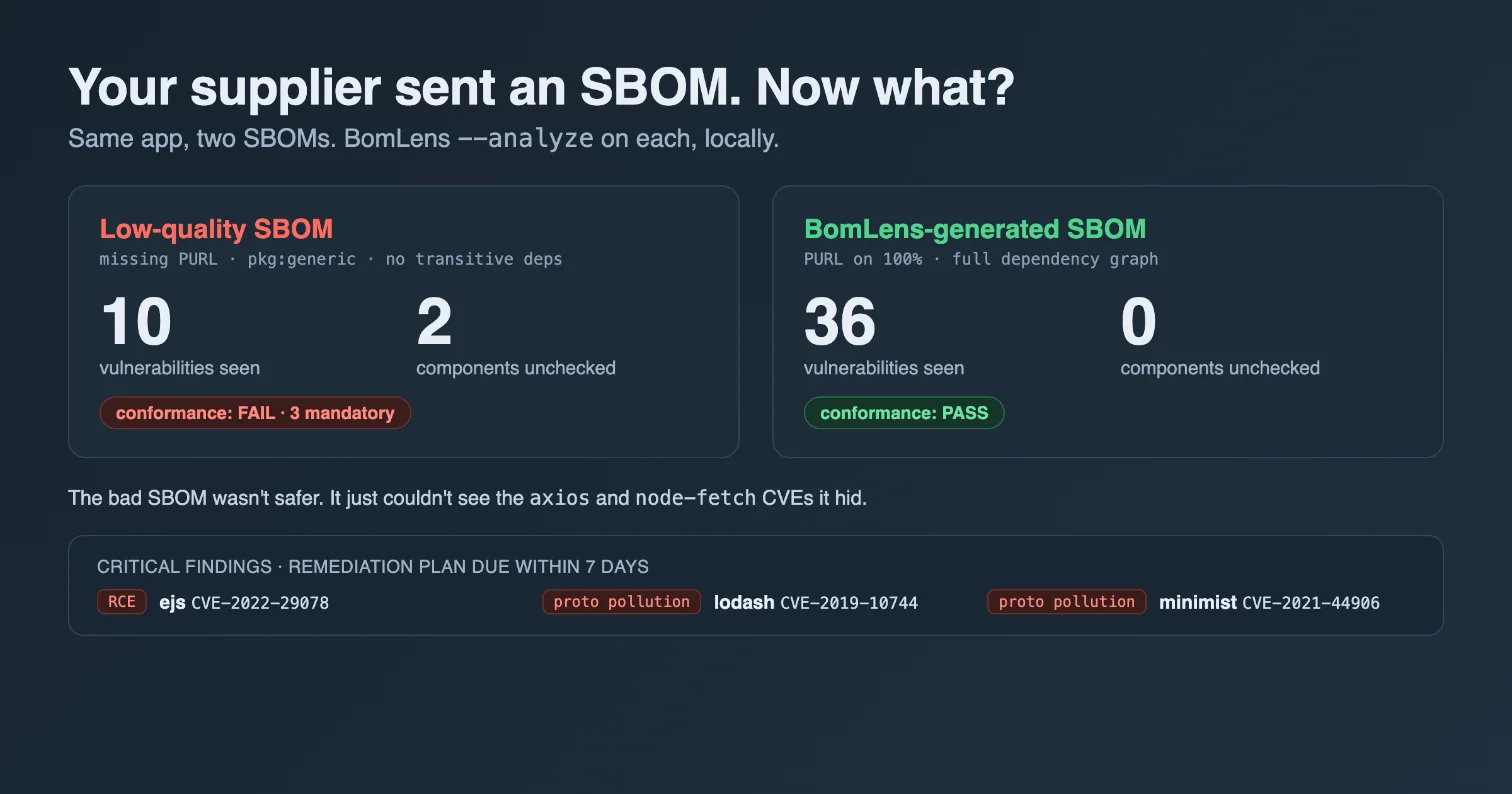
Two cards compared side by side. A low-quality SBOM shows 10 vulnerabilities seen, 2 components unchecked, and conformance FAIL with 3 mandatory failures. A BomLens-generated SBOM shows 36 vulnerabilities seen, 0 unchecked, conformance PASS. Below, three critical findings with a 7-day deadline: ejs CVE-2022-29078, lodash CVE-2019-10744, minimist CVE-2021-44906.

Your Supplier Sent an SBOM. Now What?: Turning CycloneDX Into Risk Decisions with BomLens

Here is a situation that has quietly become everyone’s problem. A vendor ships you a piece of software, and along with it a file called bom.json. It is a Software Bill of Materials, or SBOM: a machine-readable list of every open-source component inside that software, the same way a packaged food lists its ingredients. Regulators now ask for these, procurement teams now demand them, and your own security team now receives them. So the file lands in your inbox. Now what? ...
November 3, 2026 · 20 min · Scott Algatt
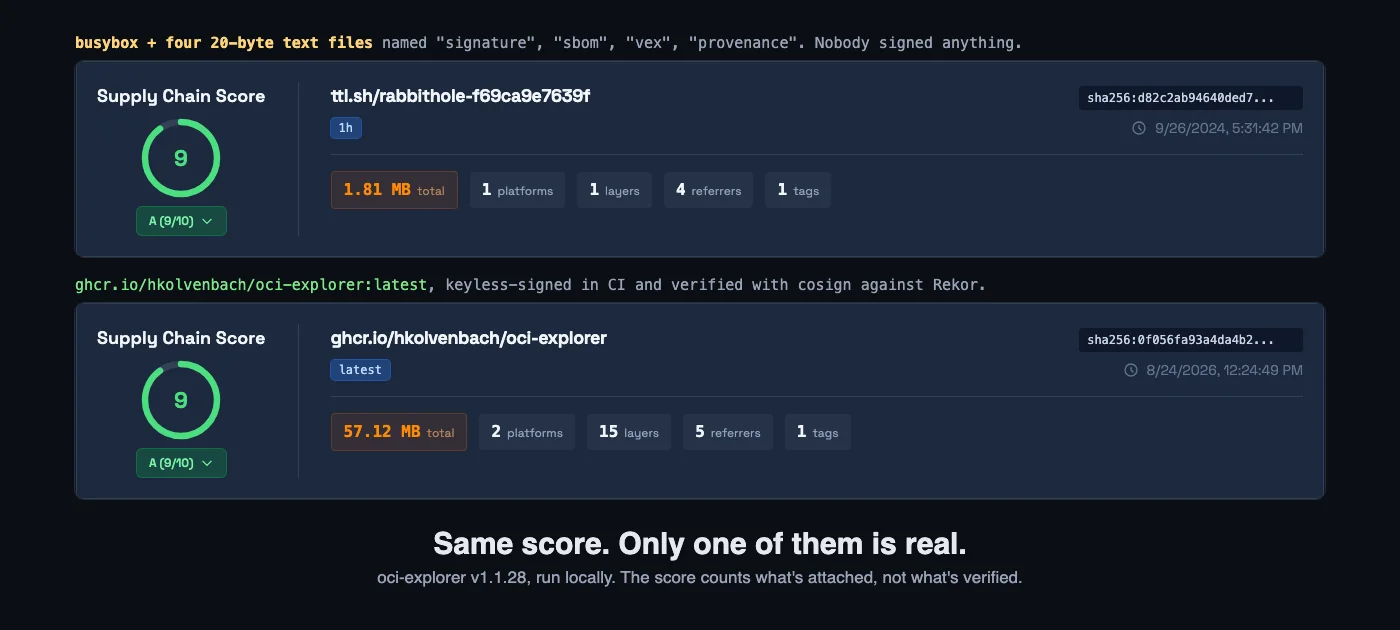
Two oci-explorer score cards stacked. The top one is a busybox image with four 20-byte junk files attached and scores 9 out of 10, grade A. The bottom one is oci-explorer's own image, keylessly signed in CI and verified with cosign, and also scores 9 out of 10, grade A.

Grade A, Signed by Nobody: What oci-explorer's Supply Chain Score Actually Measures

Ask most teams what’s attached to the container image running in production and you’ll get an answer about their CI pipeline: “we sign it, we generate an SBOM, we attach provenance.” That’s a statement about what the pipeline tried to do. Whether the registry actually holds those things, linked to the right image, in a form the next tool can find, is a different question, and it’s surprisingly hard to answer in under a minute. ...

October 2, 2026 · 21 min · Scott Algatt