Feeling overwhelmed by AI? Learn the Centaur Mindset. Read More →
A complex workflow diagram in the Dify UI showing LLM nodes and tool connections.

Beyond the Prompt: Orchestrating LLM Apps with Dify

Most “agent frameworks” are libraries that push the hard parts of production (orchestration, secrets, versioning, and audit logging) into ad-hoc glue code. As teams move from “chatting with a PDF” to shipping internal copilots, the need for a governed, observable runtime becomes undeniable. This is where Dify enters the stack. It’s a self-hostable “LLM app runtime” designed to turn agentic prototypes into real business services. What is Dify used for in LLM application development? Dify is an open-source LLM application development platform that provides a unified workflow engine, model gateway, and RAG subsystem. It allows developers to model AI applications as explicit directed acyclic graphs (DAGs), enabling governed orchestration of LLM calls, external tools, and retrieval policies with built-in operational telemetry and multi-tenant isolation. ...

May 29, 2026 · 4 min · Scott Algatt
A visual representation of an intercepting proxy sitting between a client and a server, with traffic flows being inspected in a terminal-like view.

Intercepting Opaque Traffic: A mitmproxy Security Regression Harness

Most security monitoring tools rely on server-side logs or cloud-native telemetry. But what happens when the client is opaque? When a mobile app, a single-page application (SPA), or a proprietary service is behaving in ways the server doesn’t fully document, you need a way to look at the wire directly. This post also marks the beginning of a new experiment: The Rabbit Hole Series. Every Friday, a “Rabbit Hole Generator” I built (which I later took apart in its own post) spits out a new technical topic for me to explore for 30 minutes. This week, the generator gave me mitmproxy. ...

April 3, 2026 · 5 min · Scott Algatt
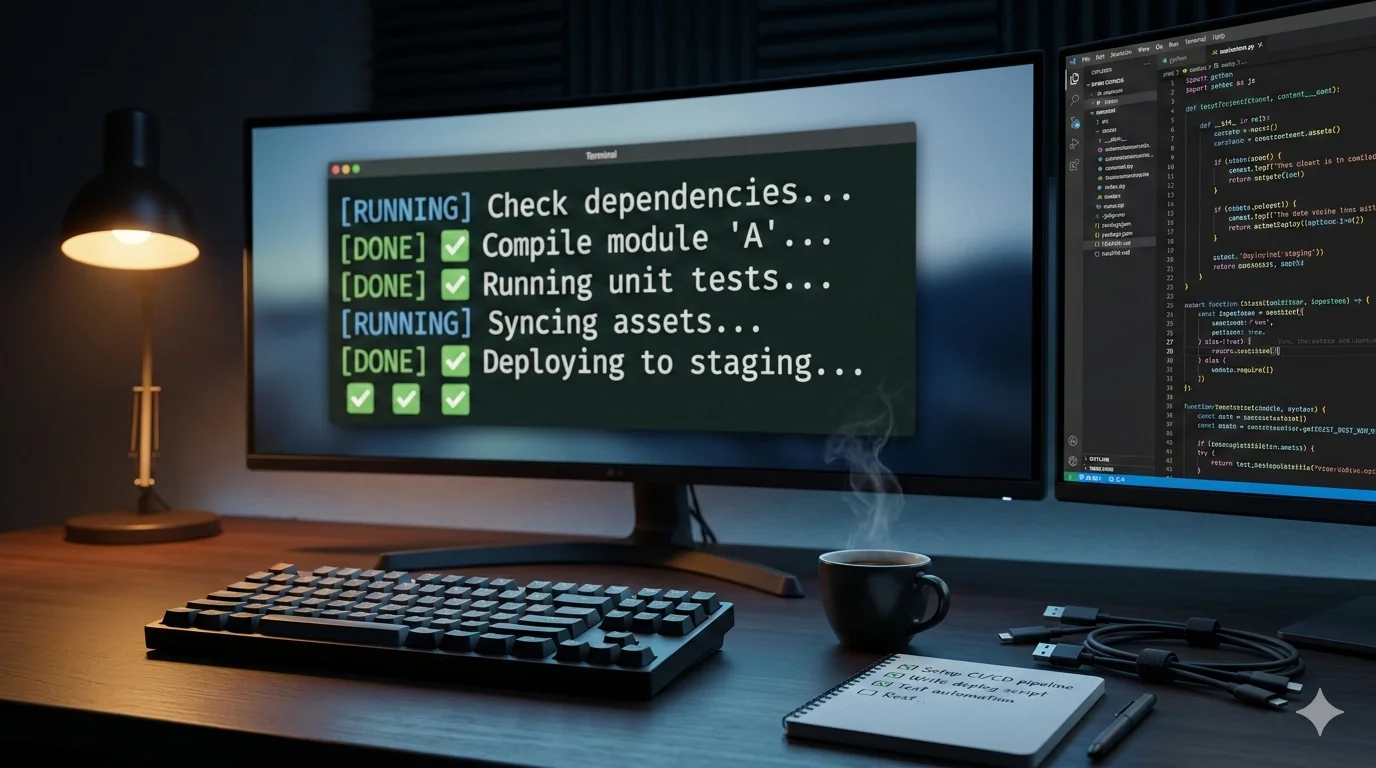
A clean developer workspace with a terminal running automated scripts, showing green output lines and a modern mechanical keyboard

Automating Your Dev Workflow: Scripts That Actually Save Time

The best automation is the script you wrote once and forgot about. Until you realize you’d be miserable without it. That’s the bar I hold every workflow script to: will this save me more time than it took to write? Most “productivity automation” content you find online fails that test. The scripts look clever in a conference talk, end up in your dotfiles, and collect dust. They solve hypothetical problems, not real ones. ...

March 27, 2026 · 12 min · Scott Algatt
A secure vault integrated into a Kubernetes container cluster, representing secrets management

Kubernetes Secrets Management: Beyond the Basics

A Kubernetes Secret is not actually secret. That’s a hard sentence to sit with, especially if you’ve been dutifully creating Secret objects and patting yourself on the back for not hardcoding credentials in your ConfigMap. The problem runs deeper than most teams realize, and it doesn’t get fixed by following the basic Kubernetes documentation. This post is about what actually works, at different scales, with honest tradeoffs for each approach. ...

March 20, 2026 · 12 min · Scott Algatt
A technical professional at a workstation, half-illuminated by natural light and half by the glow of AI-generated data visualizations

The Evolving Role of the Technical Professional in an AI World

This is the final post in “The Centaur’s Toolkit” series, where we’ve explored practical strategies for human-AI collaboration in technical work. This installment steps back from specific tools and practices to ask the bigger question: what does all of this mean for your career? Everyone’s asking if AI will take their job. They’re asking the wrong question. I’ve been watching this conversation play out across tech communities for the past couple of years, and the framing bothers me. “Will AI replace programmers?” produces a yes/no answer that nobody actually believes, regardless of which direction they lean. It generates heat without light. ...

March 13, 2026 · 13 min · Scott Algatt