Feeling overwhelmed by AI? Learn the Centaur Mindset. Read More →
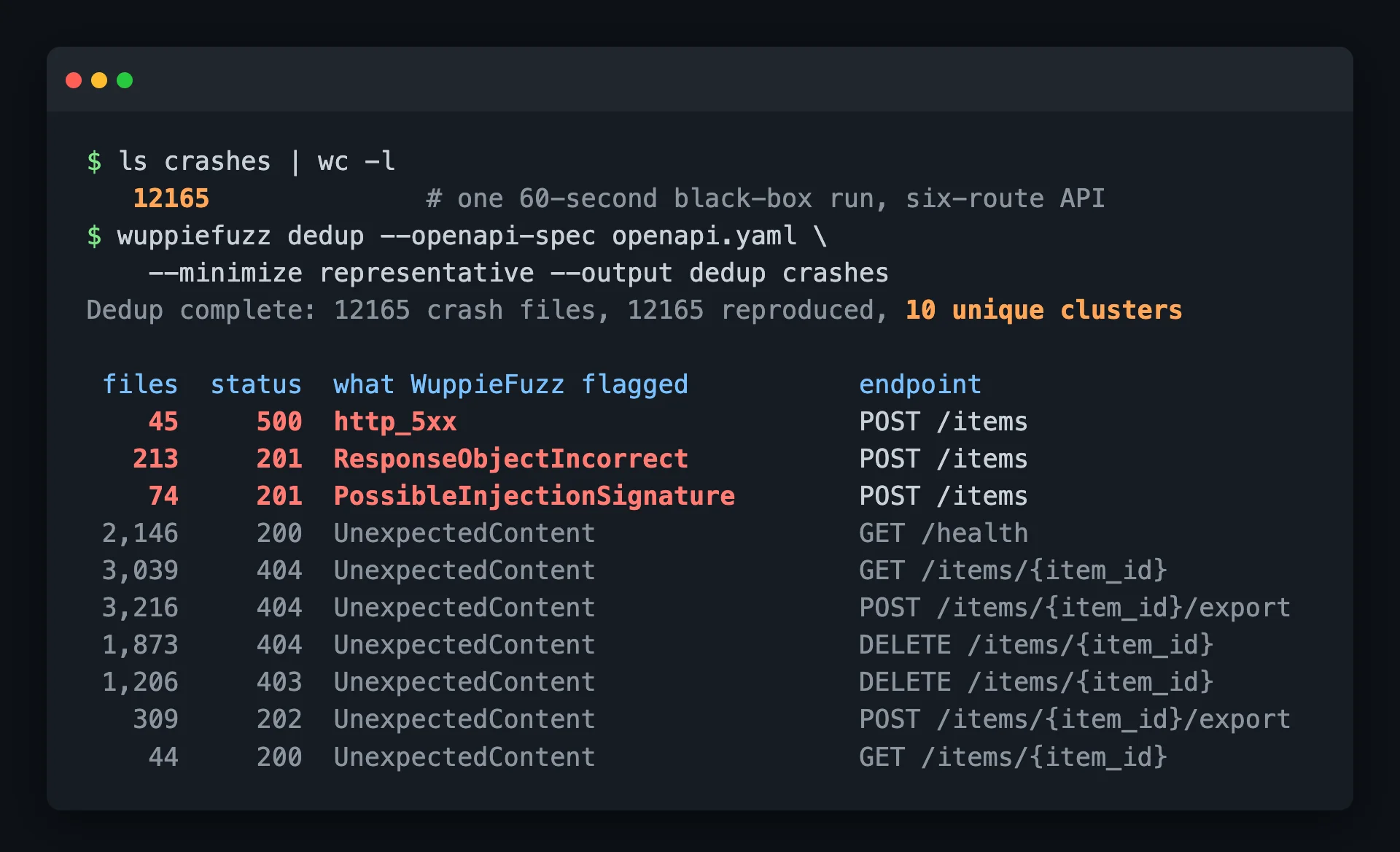
A terminal showing ls crashes | wc -l returning 12165, then wuppiefuzz dedup reducing them to 10 unique clusters. Three clusters are highlighted in red: a 500 on POST /items, an incorrect response object, and a possible injection signature. The other seven are UnexpectedContent on every endpoint.

12,165 Crashes in 60 Seconds: Fuzzing a REST API with WuppieFuzz

Most REST APIs ship with two kinds of tests: unit tests that check functions in isolation, and integration tests that walk the happy path. “Create an item, read it back, delete it, get a 204.” Those tests are written by the same people who wrote the code, so they test the inputs those people expected. Nobody writes the test that sends a 65-character name, a quantity of 2^64, or a DELETE for an item that was never created, because nobody thought of it. ...

October 23, 2026 · 33 min · Scott Algatt
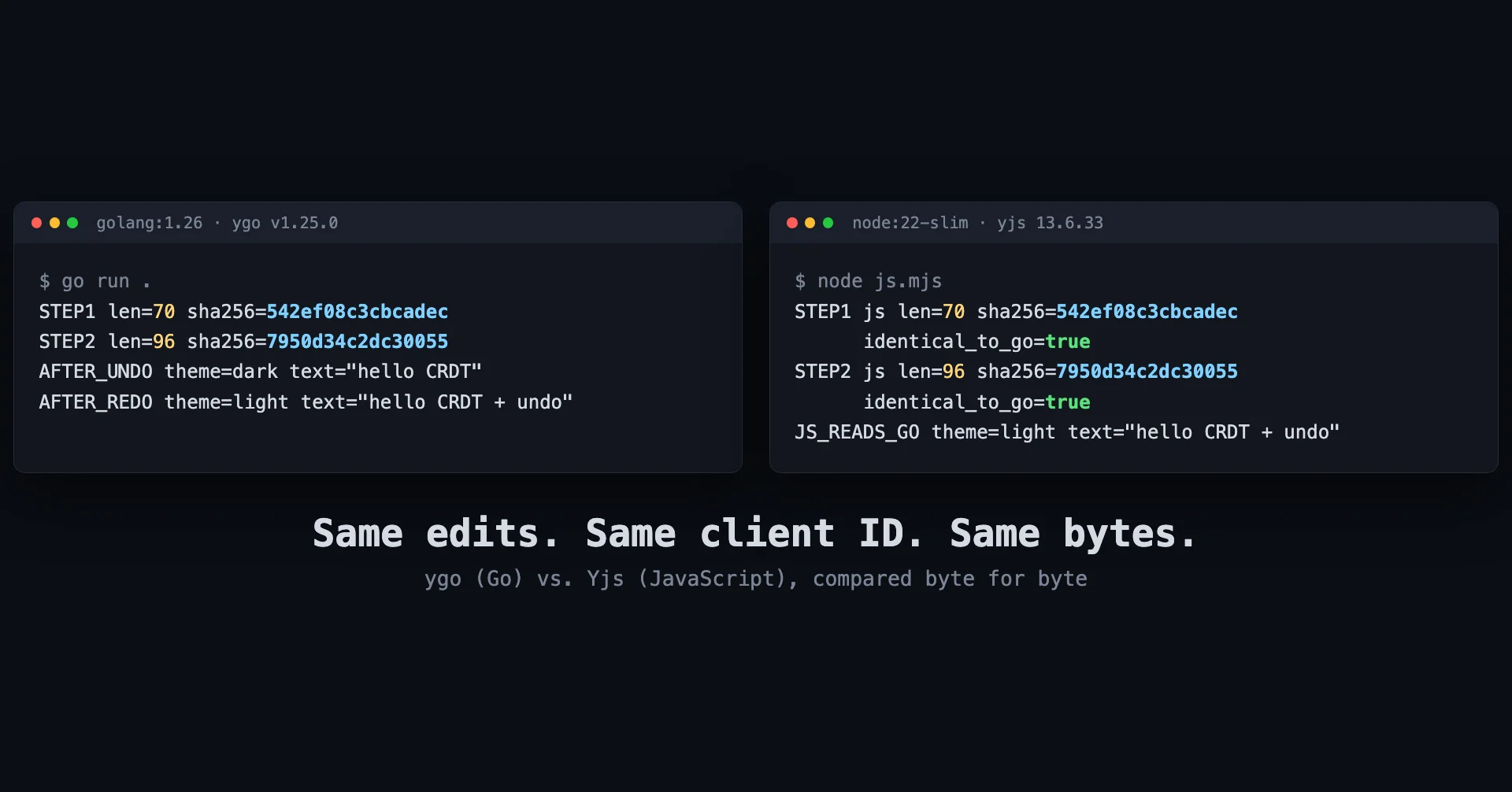
Two terminal panes side by side: a Go program using ygo prints a 96-byte update with sha256 7950d34c2dc30055, and a Node.js script using yjs 13.6.33 prints the same length and hash with identical_to_go=true

Same Bytes, Different Language: Testing ygo's Claim of Byte-for-Byte Yjs Compatibility

Every real-time collaborative editor has the same hard problem underneath it. Two people type into the same paragraph at the same moment, possibly while one of them is offline on a train, and when everything reconnects both screens have to end up showing exactly the same text without anyone’s edit vanishing. The family of data structures built to solve that is called a CRDT (Conflict-free Replicated Data Type): a structure designed so that copies of a document (called replicas) can accept edits independently and always merge to the same result, in any order, with no central referee deciding who wins. ...

October 16, 2026 · 19 min · Scott Algatt

Revolutionizing Vulnerability Discovery with AI-Powered Fuzzing

Revolutionizing Vulnerability Discovery with AI-Powered Fuzzing =========================================================== Introduction Fuzzing is an automated testing technique used to discover security vulnerabilities in software and protocols by providing invalid or unexpected input. With the increasing complexity of systems and the internet of things (IoT), traditional fuzzing methods are becoming less effective. Artificial intelligence (AI) can be used to enhance fuzzing techniques, making them more efficient and effective. In this article, we will explore the concept of fuzzing with AI and its applications in vulnerability discovery. ...

March 31, 2025 · 4 min · Scott