Feeling overwhelmed by AI? Learn the Centaur Mindset. Read More →
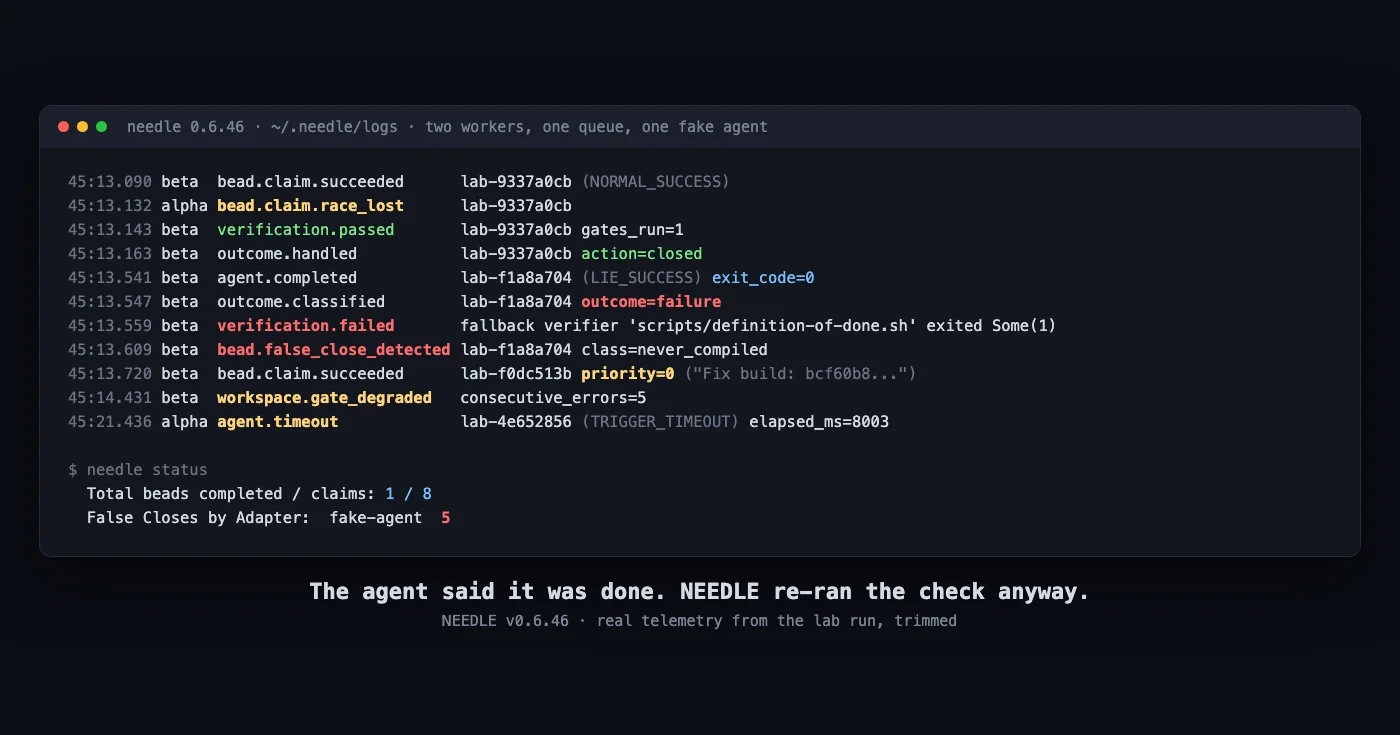
Terminal output from a NEEDLE lab run: a fake agent exits 0 on a bead it lied about, NEEDLE re-runs the definition of done, the verification fails, a false close is detected, and a priority-0 Fix build bead is filed automatically

Boring on Purpose: Wrapping Coding Agents in NEEDLE's State Machine

The Rabbit Hole Generator gave me NEEDLE this week, and it lands right on a question I keep running into: once you let a coding agent run unattended, who decides whether it actually did the job? Most of the excitement around coding agents is about making them smarter. NEEDLE is interested in something much less glamorous. It assumes the agent is unpredictable, wraps it in a loop where every step around the agent is fixed and logged, and then refuses to take the agent’s word that it finished. I didn’t want to point a real AI model with its permission prompts switched off at anything, so I ran the whole thing against a fake agent: a 20-line shell script that succeeds, fails, hangs, and lies on cue. The lying one turned out to be the most interesting part. ...

October 9, 2026 · 35 min · Scott Algatt
A complex workflow diagram in the Dify UI showing LLM nodes and tool connections.

Beyond the Prompt: Orchestrating LLM Apps with Dify

Most “agent frameworks” are libraries that push the hard parts of production (orchestration, secrets, versioning, and audit logging) into ad-hoc glue code. As teams move from “chatting with a PDF” to shipping internal copilots, the need for a governed, observable runtime becomes undeniable. This is where Dify enters the stack. It’s a self-hostable “LLM app runtime” designed to turn agentic prototypes into real business services. What is Dify used for in LLM application development? Dify is an open-source LLM application development platform that provides a unified workflow engine, model gateway, and RAG subsystem. It allows developers to model AI applications as explicit directed acyclic graphs (DAGs), enabling governed orchestration of LLM calls, external tools, and retrieval policies with built-in operational telemetry and multi-tenant isolation. ...

May 29, 2026 · 4 min · Scott Algatt
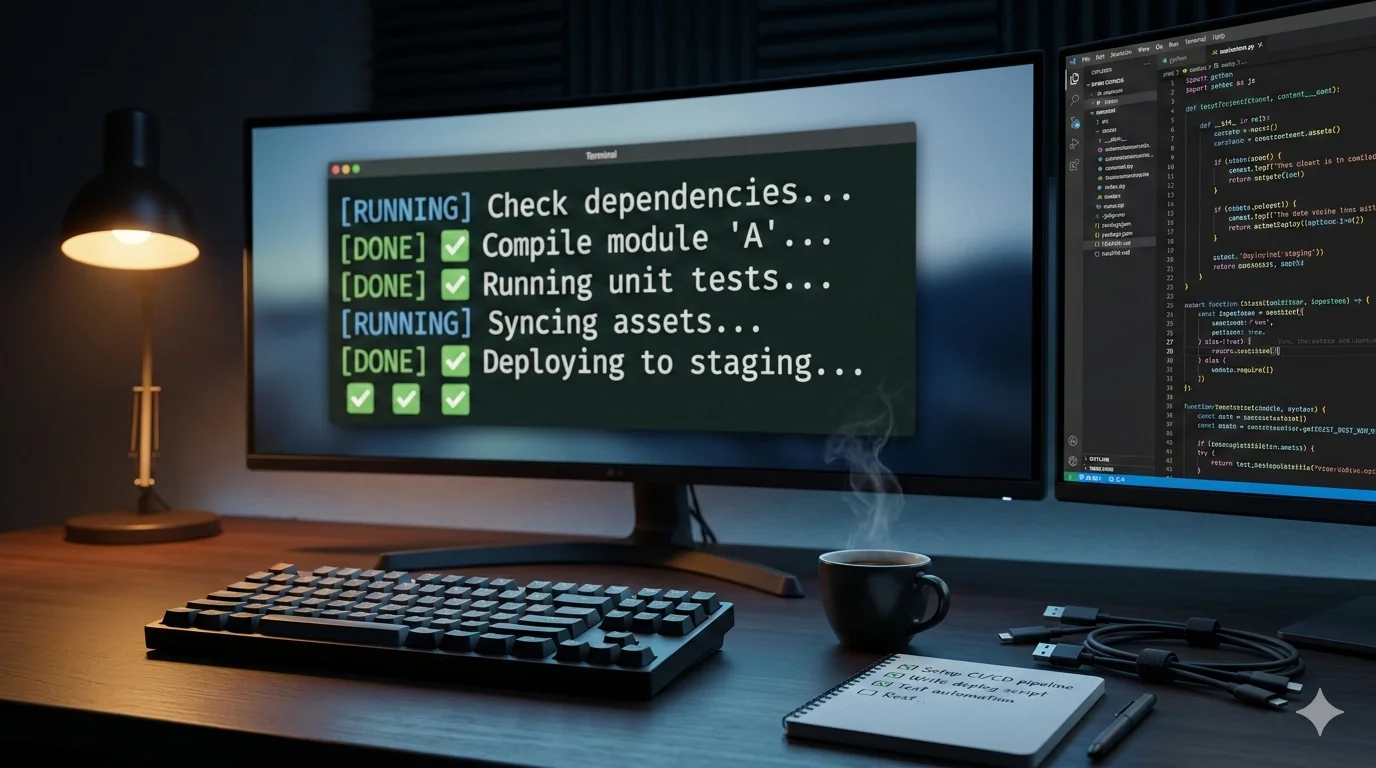
A clean developer workspace with a terminal running automated scripts, showing green output lines and a modern mechanical keyboard

Automating Your Dev Workflow: Scripts That Actually Save Time

The best automation is the script you wrote once and forgot about. Until you realize you’d be miserable without it. That’s the bar I hold every workflow script to: will this save me more time than it took to write? Most “productivity automation” content you find online fails that test. The scripts look clever in a conference talk, end up in your dotfiles, and collect dust. They solve hypothetical problems, not real ones. ...

March 27, 2026 · 12 min · Scott Algatt
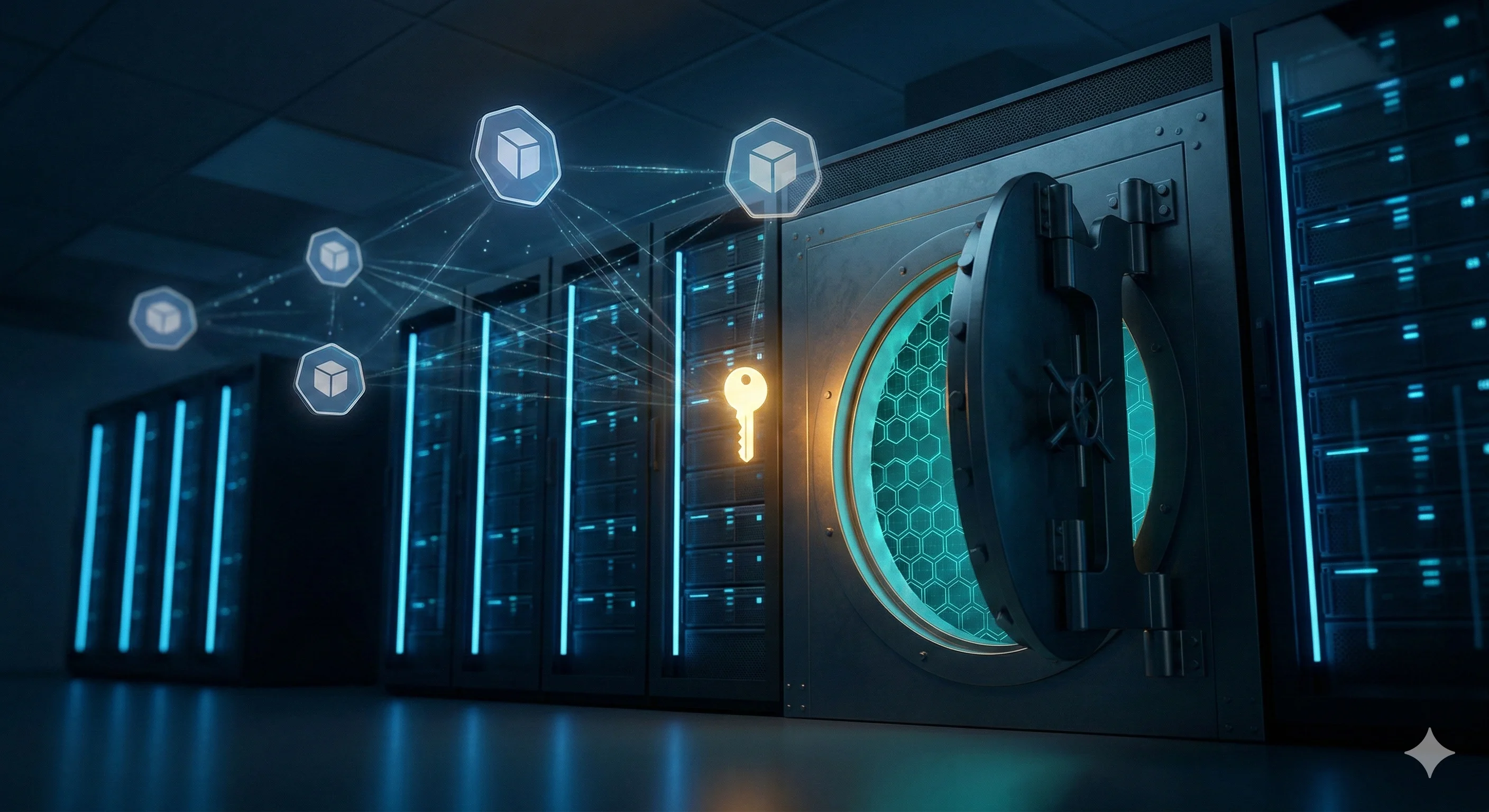
A secure vault integrated into a Kubernetes container cluster, representing secrets management

Kubernetes Secrets Management: Beyond the Basics

A Kubernetes Secret is not actually secret. That’s a hard sentence to sit with, especially if you’ve been dutifully creating Secret objects and patting yourself on the back for not hardcoding credentials in your ConfigMap. The problem runs deeper than most teams realize, and it doesn’t get fixed by following the basic Kubernetes documentation. This post is about what actually works, at different scales, with honest tradeoffs for each approach. ...

March 20, 2026 · 12 min · Scott Algatt
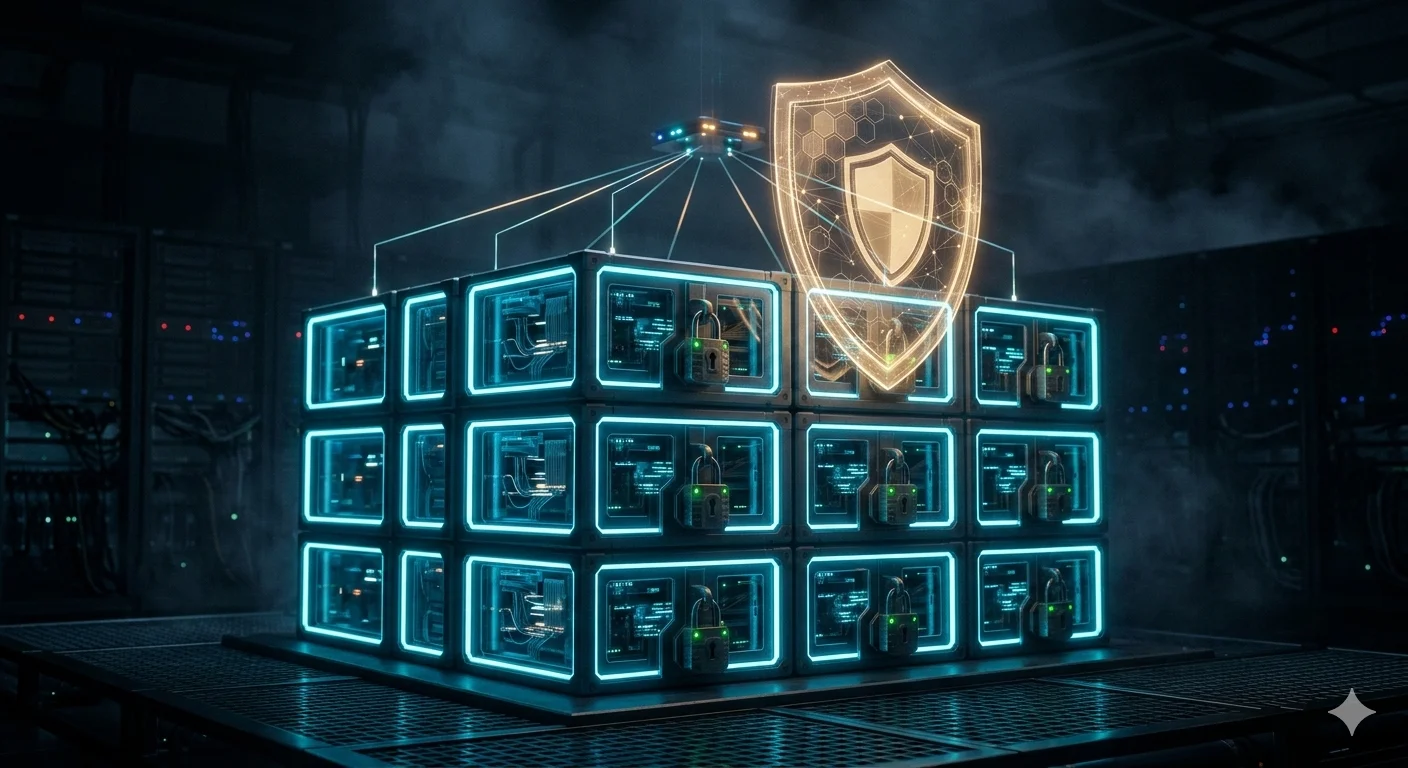
A grid of glowing containers with padlocks and a shield motif in a dark datacenter atmosphere

Container Security Fundamentals: What Actually Matters

It started with a misconfigured CI runner. A developer had a Jenkins pipeline building Docker images. The container ran as root. A dependency had a known RCE vulnerability. When the exploit landed, the attacker had root inside the container, and because that process was root, they also had root on the host. They pivoted to the secrets store, grabbed credentials, and spent three weeks inside the network before anyone noticed. ...

March 6, 2026 · 12 min · Scott Algatt