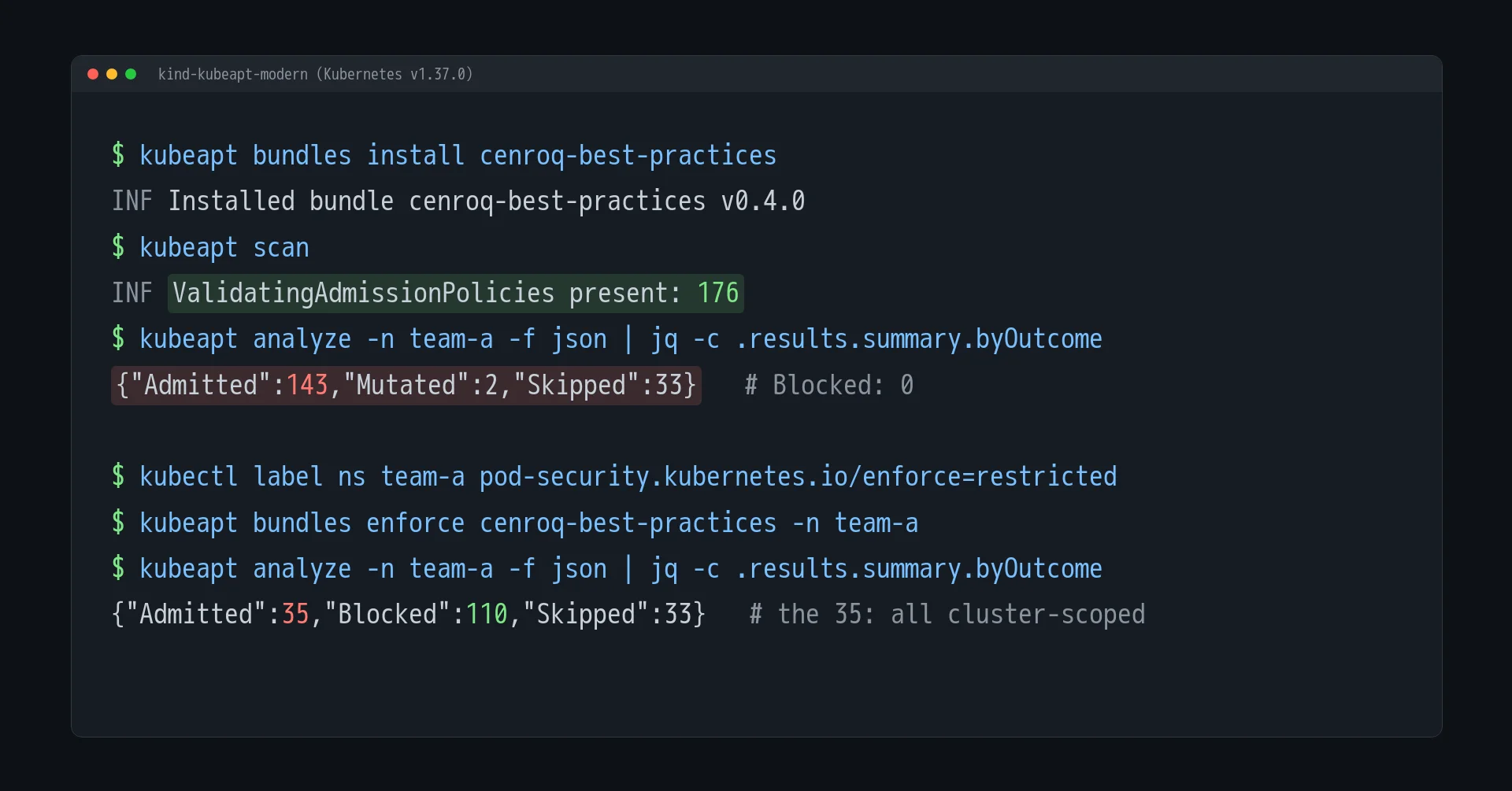
176 Policies Installed, Zero Enforced: Testing Kubernetes Admission Control with KubeAPT
Every Kubernetes cluster has a moment, right before anything is written to its database, where it can say no. A pod that wants to run as root on the node, a role that grants * on everything, a service that opens a port on every machine: all of them pass through a checkpoint called admission control, and that checkpoint is where most cluster-hardening advice ends up. The trouble is that admission control is easy to configure and hard to see. Policies sit in the cluster as objects. Whether they actually stop anything depends on bindings, labels, versions, and ordering that no single kubectl get shows you. ...