Feeling overwhelmed by AI? Learn the Centaur Mindset. Read More
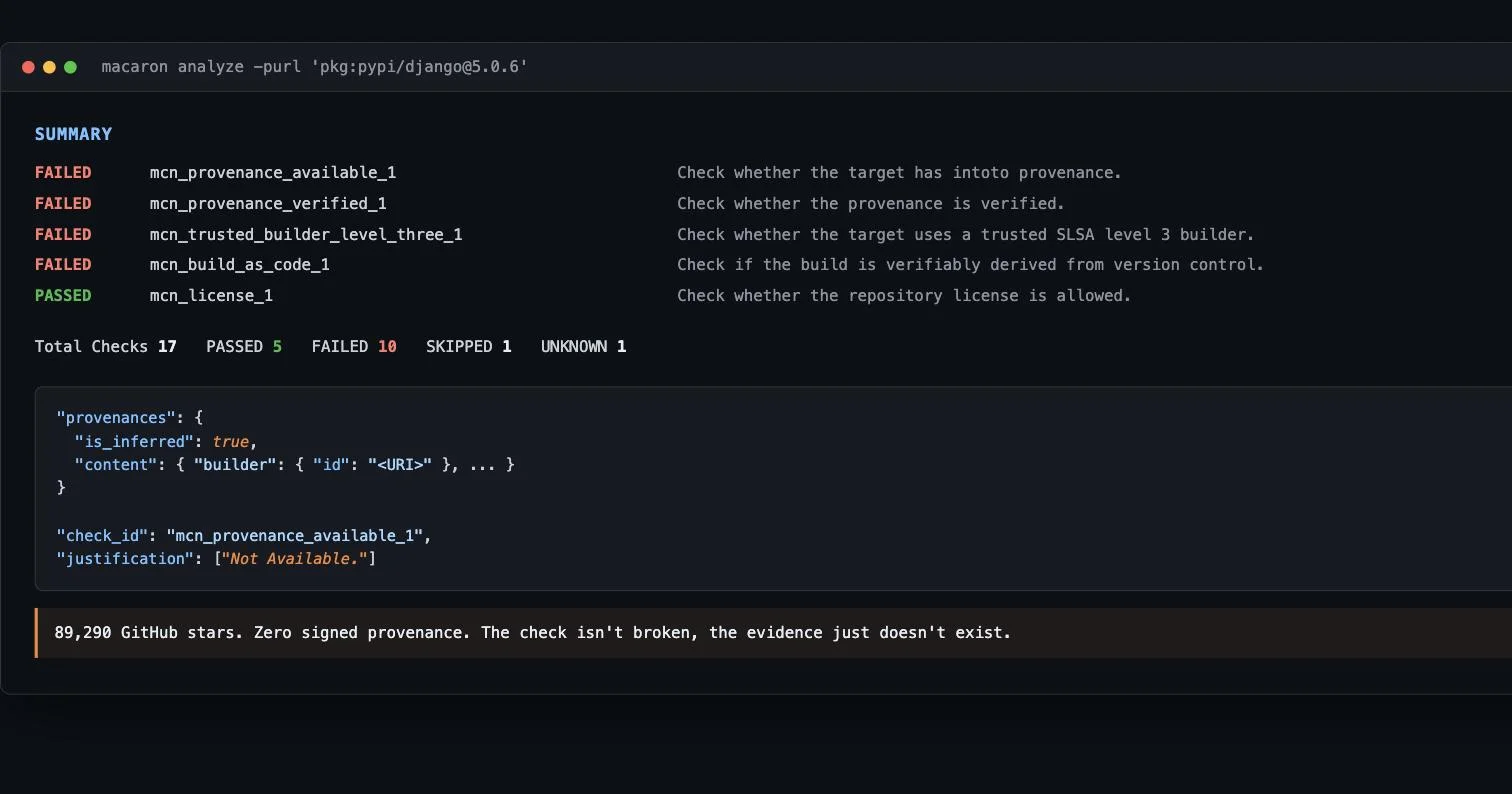
Terminal-style output from macaron analyze against Django 5.0.6, showing four failed provenance/build checks, one passed license check, a 17-check summary totaling 10 failures, and the report JSON showing is_inferred true with a Not Available justification

Beyond CVEs: Verifying Supply Chain Provenance with Macaron

The Rabbit Hole Generator gave me Macaron this week, Oracle’s open-source tool for checking software supply chain security. My first instinct was to file it next to every other dependency scanner I’ve used: point it at a package, get a list of CVEs back. That’s not what it does, and the gap between those two things turned out to be the actual point. A vulnerability scanner answers “does this package version have a known CVE.” Macaron answers a different question: “was this artifact actually built from the source code we think it was, by a process we can verify, with evidence that isn’t just the vendor’s word for it.” Those sound similar. They aren’t. A package can have zero known CVEs and still have no evidence at all connecting the file you pip installed to the GitHub repo everyone assumes it came from. ...
September 11, 2026 · 11 min · Scott Algatt
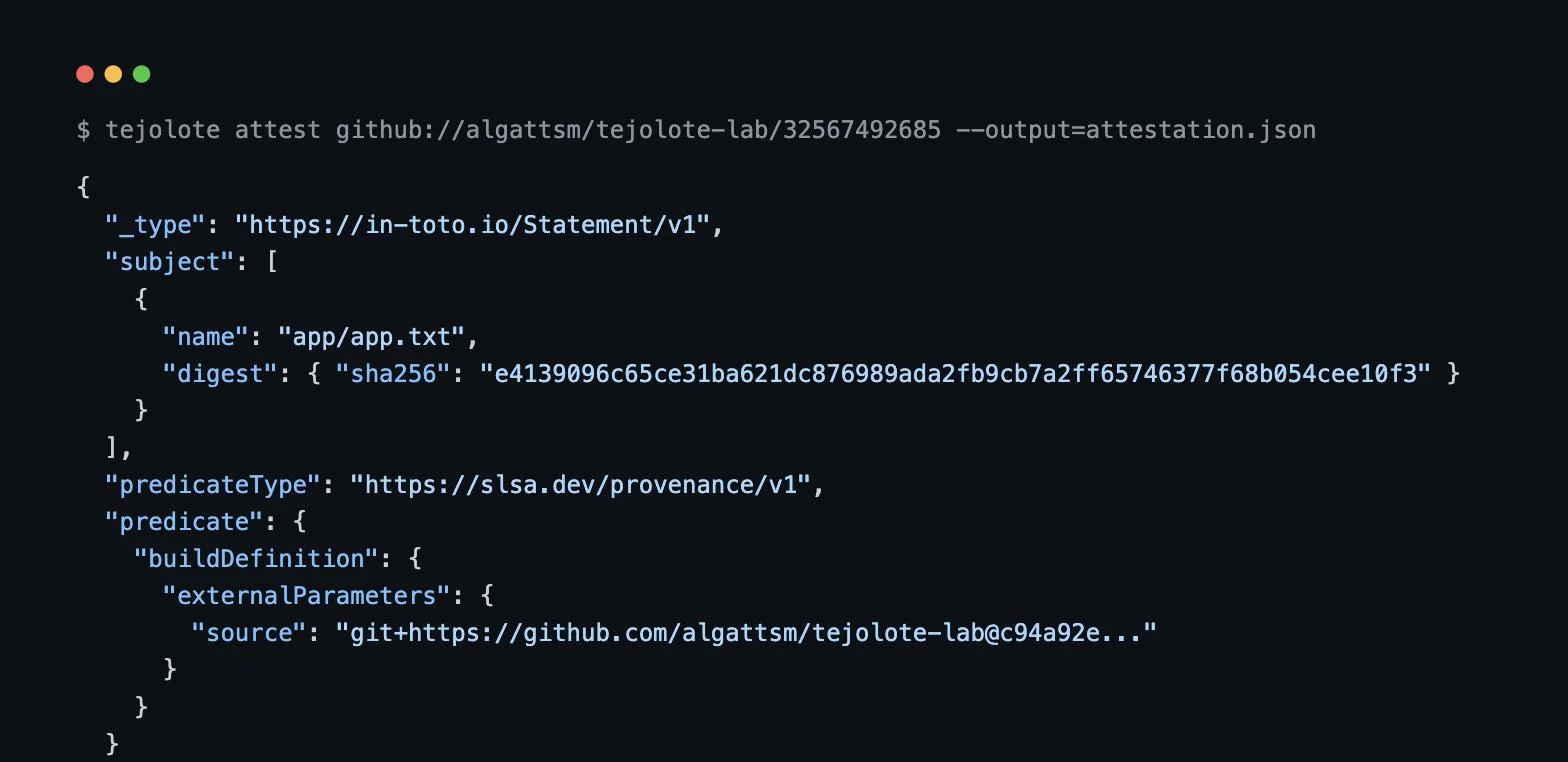
Terminal output showing a real SLSA provenance JSON statement generated by Tejolote from a live GitHub Actions run, with a matching sha256 artifact digest

Provenance From the Outside: Attesting Real Builds with Tejolote

A signature on a piece of software proves someone with a key signed it. It doesn’t prove much about where that software actually came from: what source it was built from, what process built it, or whether anything happened to it between “code written” and “artifact shipped.” Provenance is the term for closing that gap: a verifiable record tying a specific commit, through a specific build process, to a specific output, in a way that’s checkable rather than just asserted. ...

August 28, 2026 · 13 min · Scott Algatt