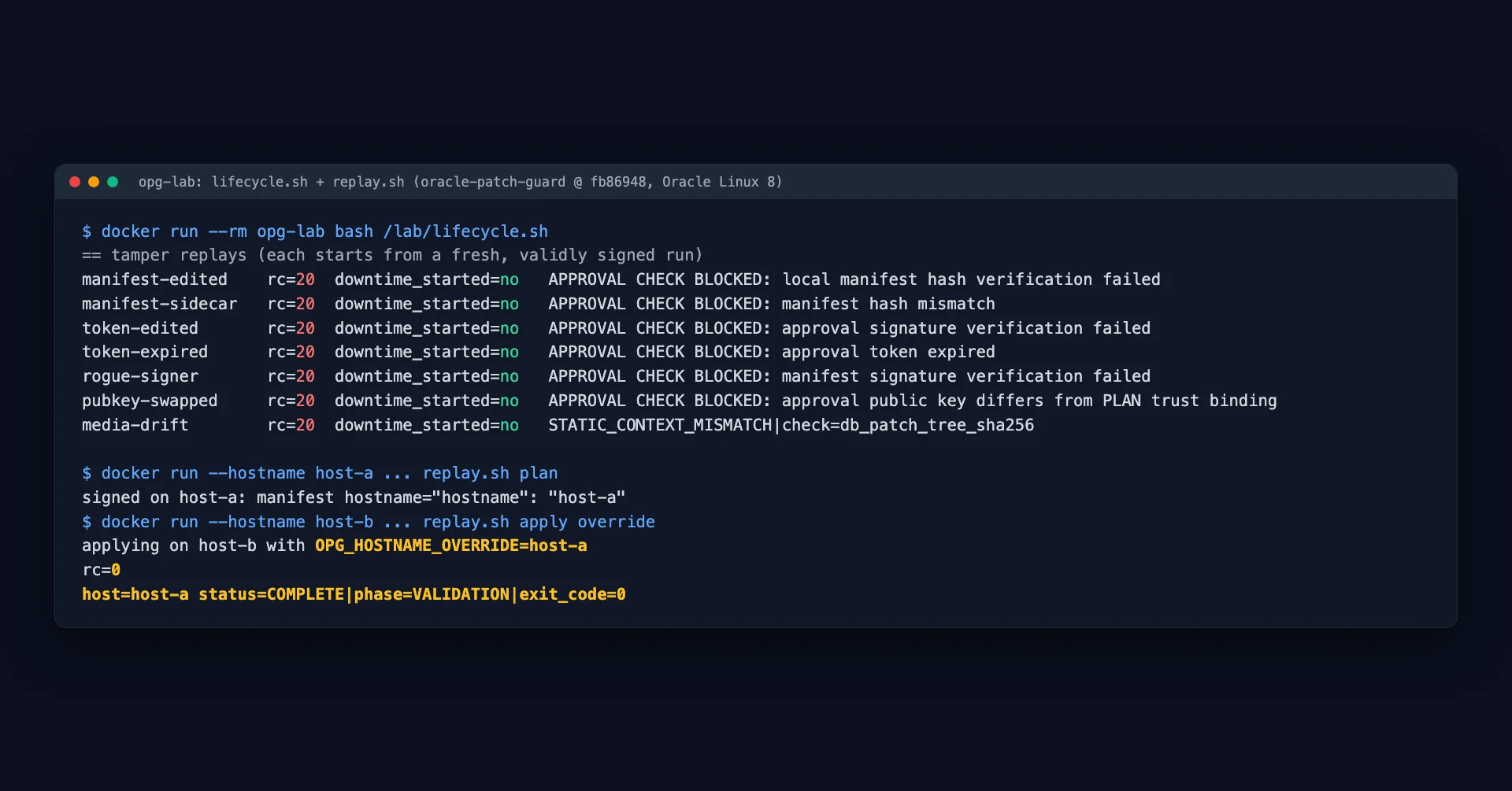
Signing the Maintenance Window: Testing Oracle Patch Guard's Approval Chain
Patching a production database is the most privileged routine change most teams make. Someone stops the database, rewrites the software it runs on, restarts it, and runs SQL against the data dictionary, usually in a window at 2 AM. The decision to do it lives somewhere else entirely: a change ticket, a meeting, a “yes, go ahead” in chat. Nothing technical connects the thing that was approved to the thing that actually runs. If the patch file changed since Tuesday, the target is a different server, or the backup the change board was promised failed last night, the 2 AM operator usually finds out afterward, if at all. ...