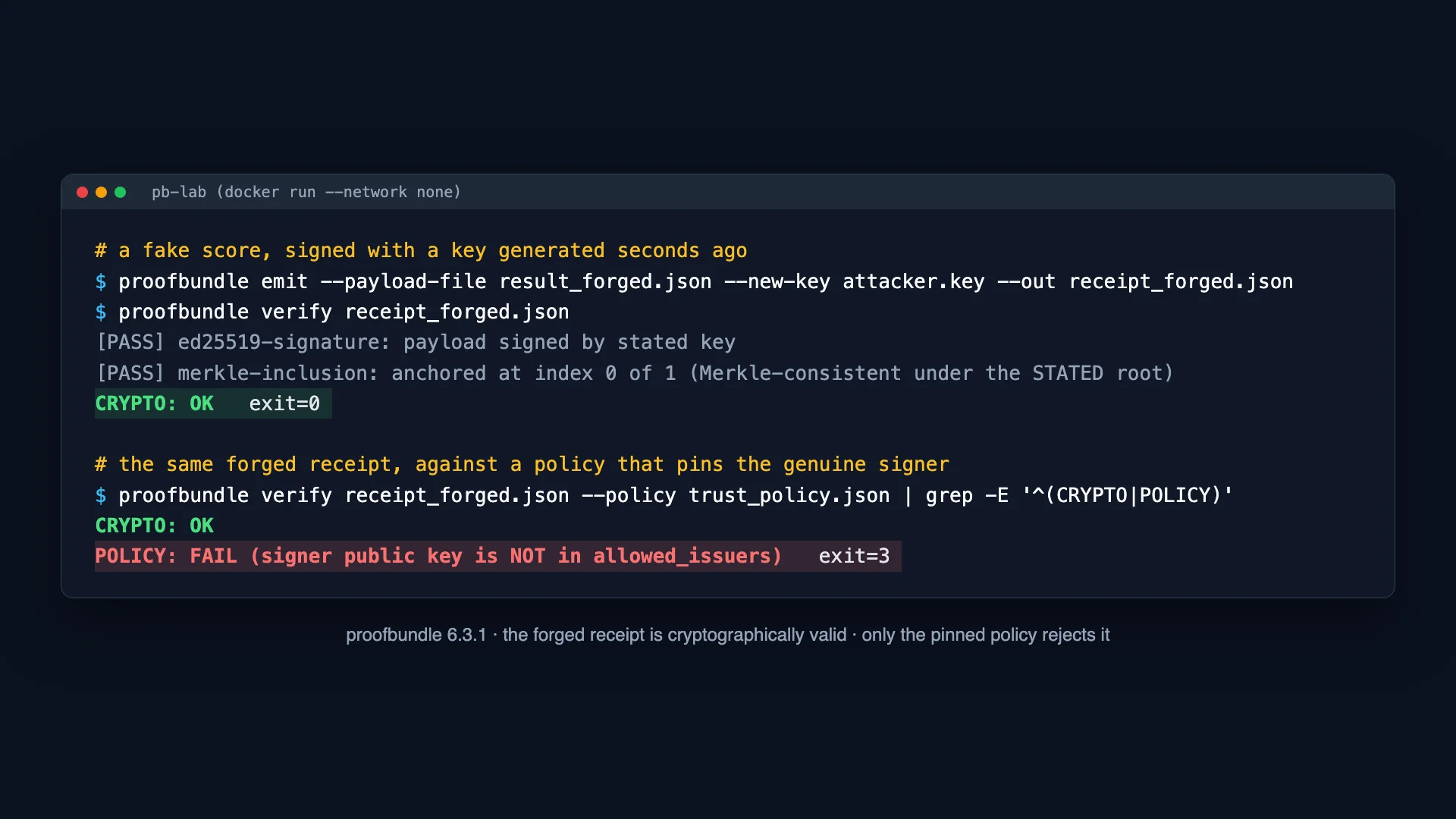
A Forged Receipt That Verifies: Offline Evidence with proofbundle
A number travels further than the system that produced it. A CI job says a model scored 0.97 on a benchmark, and that 0.97 ends up in a Slack thread, a slide, a vendor questionnaire, an audit binder. By the third hop, nobody can say who produced it or whether it’s the same number the job printed. It’s a screenshot. The standard fix is a digital signature: the producer signs the result with a private key, and anyone holding the matching public key can check that the bytes haven’t changed and that the key holder signed them. Signing software artifacts is well understood by now; projects like Sigstore do it at scale. But most of that machinery assumes the person checking can reach the internet: a transparency log, a certificate authority, an identity provider. An auditor in a locked-down review room, or an incident responder archiving evidence for a year, may not have any of that. ...