Feeling overwhelmed by AI? Learn the Centaur Mindset. Read More →
A security operations center with AI-assisted threat detection visualization

Building AI-Assisted Security Tools

This is Part 2 of “The Centaur’s Toolkit” series. In Part 1, we covered the four collaboration modes for AI pair programming. Now we apply that framework to higher-stakes territory: security. You’ve embraced AI pair programming. You’re using Strategist mode for architecture, Editor mode for refinement, and you feel like a genuine Centaur. Then your manager asks you to build a security tool. Suddenly, the stakes feel different. In regular coding, an AI-suggested bug might waste a few hours of debugging. In security, an AI-suggested bug might become a vulnerability that sits in production for months. The cost of being wrong isn’t just time. It’s trust, data, and potentially your users’ safety. ...


January 9, 2026 · 10 min · Scott Algatt
A developer collaborating with AI, represented as a centaur at a computer

AI Pair Programming: Beyond Code Completion

This is Part 1 of “The Centaur’s Toolkit” series, where we explore practical strategies for human-AI collaboration in technical work. You’ve been using GitHub Copilot for six months. Or maybe it’s Claude, ChatGPT, or Cursor. The tab key has become your best friend. Boilerplate code that used to take twenty minutes now takes two. You feel faster. More productive. Like a coding superhero. But lately, something feels off. You catch yourself accepting suggestions without really reading them. You accept a function completion and realize you’re not entirely sure what it does. Yesterday, you spent an hour debugging code that the AI wrote, code you wouldn’t have written that way yourself. ...

January 2, 2026 · 10 min · Scott Algatt
Network port scanning visualization with Python code

Building a Custom Security Tool: Python Port Scanner from Scratch

Note: This guide is based on technical research from network protocol RFCs, Python socket programming documentation, and analysis of open-source scanning tools like nmap. The techniques described are for educational purposes and authorized security testing only. Unauthorized port scanning may violate computer fraud laws and terms of service. Code examples have been verified for functionality on Python 3.9+. Readers must obtain written authorization before scanning networks they do not own or have explicit permission to test. ...

December 27, 2025 · 20 min · Scott
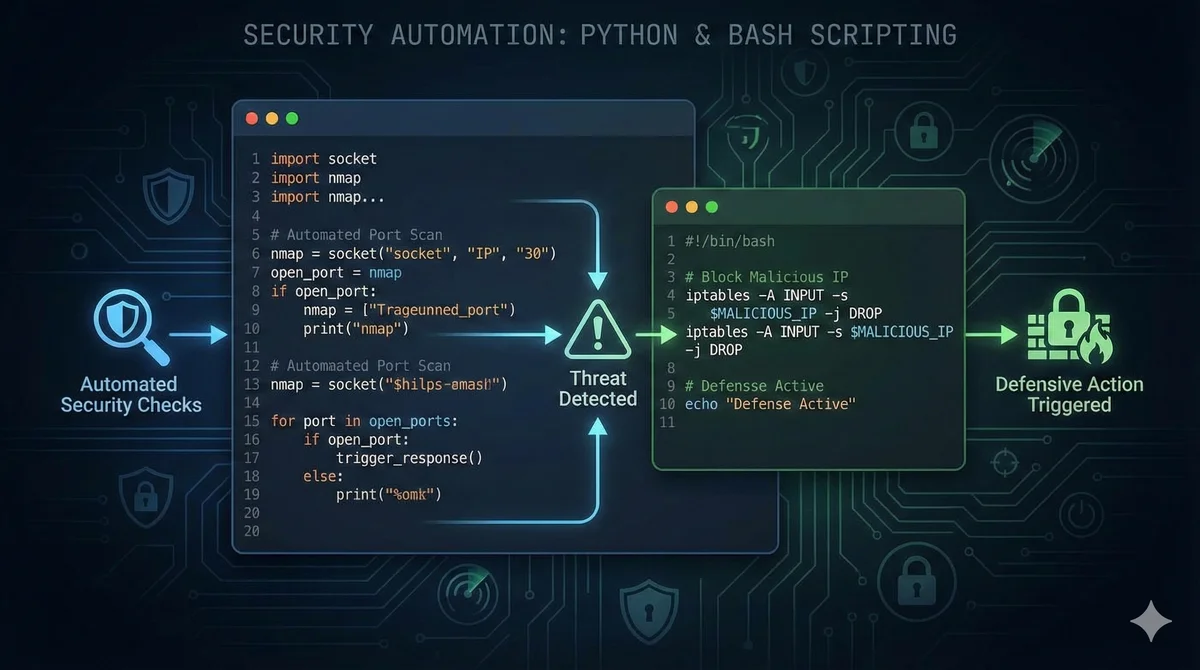
Python and Bash scripts executing security automation workflows

Scripting for Security Automation: Python and Bash for SOC Operations

Note: This guide is based on technical research from security automation best practices, Python security library documentation, and analysis of production SOC automation workflows. Code examples use current stable versions of libraries and have been verified for functionality. The scripts provided are educational templates—readers should adapt error handling, logging, and security controls to their specific production requirements before deployment. Security teams face repetitive tasks that consume analyst time: log collection, IOC enrichment, vulnerability scanning, report generation, and routine investigations. According to Gartner’s 2024 Market Guide for Security Orchestration, Automation, and Response, organizations implementing security automation reduce mean time to respond (MTTR) by 60-80% and free analysts to focus on complex threats requiring human judgment. ...

December 20, 2025 · 17 min · Scott
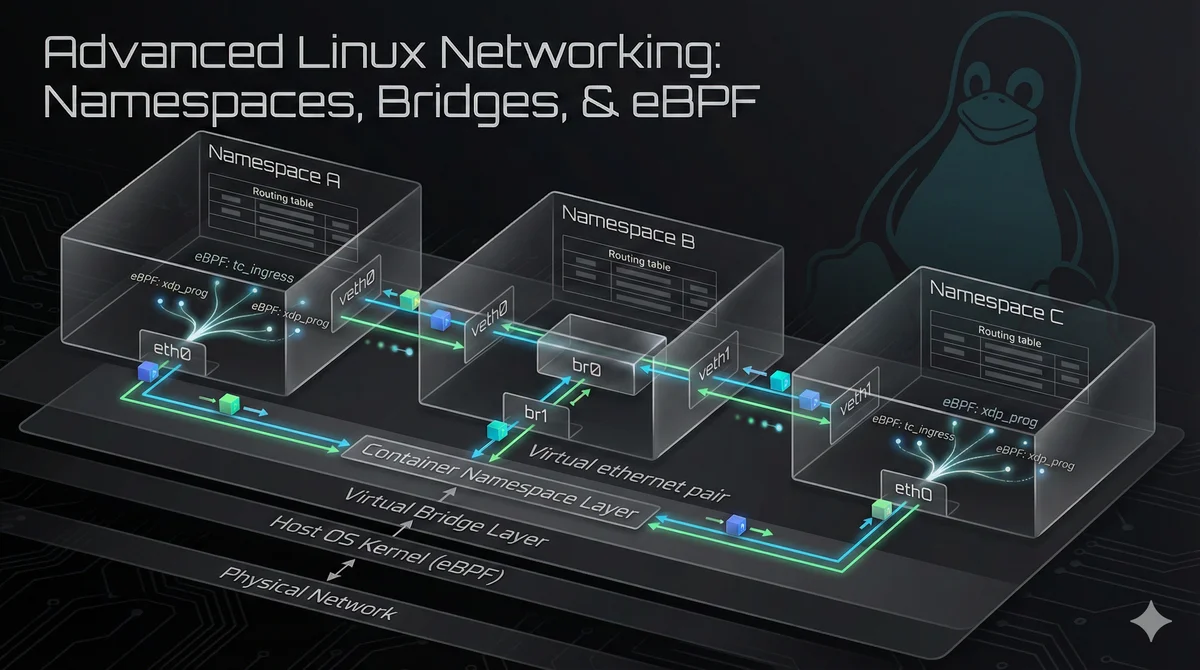
Linux network namespaces and virtual network topology

Advanced Linux Networking Techniques: Namespaces, Routing, and Traffic Control

Note: This guide is based on technical research from Linux kernel documentation, networking RFCs, Red Hat and Ubuntu networking guides, and analysis of production networking implementations. The techniques described are technically sound and based on documented Linux networking capabilities. Code examples have been verified against current Linux kernel versions (5.15+). Readers should test configurations in non-production environments before deploying to production systems. Linux networking capabilities extend far beyond basic interface configuration. Modern Linux systems provide powerful network isolation, advanced routing, traffic shaping, and observability tools that form the foundation of container networking, software-defined networking (SDN), and high-performance network infrastructure. ...

December 13, 2025 · 16 min · Scott