Feeling overwhelmed by AI? Learn the Centaur Mindset. Read More →
Site-to-site networking between home WiFi and Kubernetes

Access Your Kubernetes Cluster from Any Device on Your WiFi -- No VPN Client Required

The Goal I have a DigitalOcean Kubernetes cluster running services like n8n (workflow automation), SearXNG (search), PostgreSQL, and Redis. I also have a Raspberry Pi 5 running OpenWrt as my home router. I wanted every device on my WiFi – laptops, phones, tablets – to be able to access my K8s services directly by ClusterIP, without installing Tailscale (or any VPN client) on each device. The result: my wife can open http://10.245.15.122:5678 on her laptop and hit n8n. My iPad can reach SearXNG. Any device on the WiFi just… works. The OpenWrt router handles the encrypted tunnel transparently. ...
May 22, 2026 · 8 min · Scott
Tailscale mesh network connecting home and cloud

Connecting Everything with Tailscale: K8s Meets Home Network

Series: How I Used Claude Code to Slash My Cloud Bill by 63% Part 1: The $198/Month Wake-Up Call Part 2: Migrating 7 Static Sites to Cloudflare Pages Part 3: Killing the Load Balancer with Cloudflare Tunnel Part 4: Building a Home Router with a Raspberry Pi 5 Part 5: Connecting Everything with Tailscale (you are here) Part 6: The Final Architecture - $74/mo and Zero Regrets The Problem: Private Access Without Public Exposure After the Cloudflare Tunnel work in Part 3, I had one service (n8n) accessible through a tunnel and everything else locked down inside the Kubernetes cluster. But I had other internal services I wanted to reach from my home network – things like SearXNG, Redis Commander, and the Kubernetes dashboard. None of these should be publicly accessible. I don’t want a public endpoint for my search engine or my database admin tool. ...

May 8, 2026 · 9 min · Scott
Network port scanning visualization with Python code

Building a Custom Security Tool: Python Port Scanner from Scratch

Note: This guide is based on technical research from network protocol RFCs, Python socket programming documentation, and analysis of open-source scanning tools like nmap. The techniques described are for educational purposes and authorized security testing only. Unauthorized port scanning may violate computer fraud laws and terms of service. Code examples have been verified for functionality on Python 3.9+. Readers must obtain written authorization before scanning networks they do not own or have explicit permission to test. ...

December 27, 2025 · 20 min · Scott
Linux network namespaces and virtual network topology

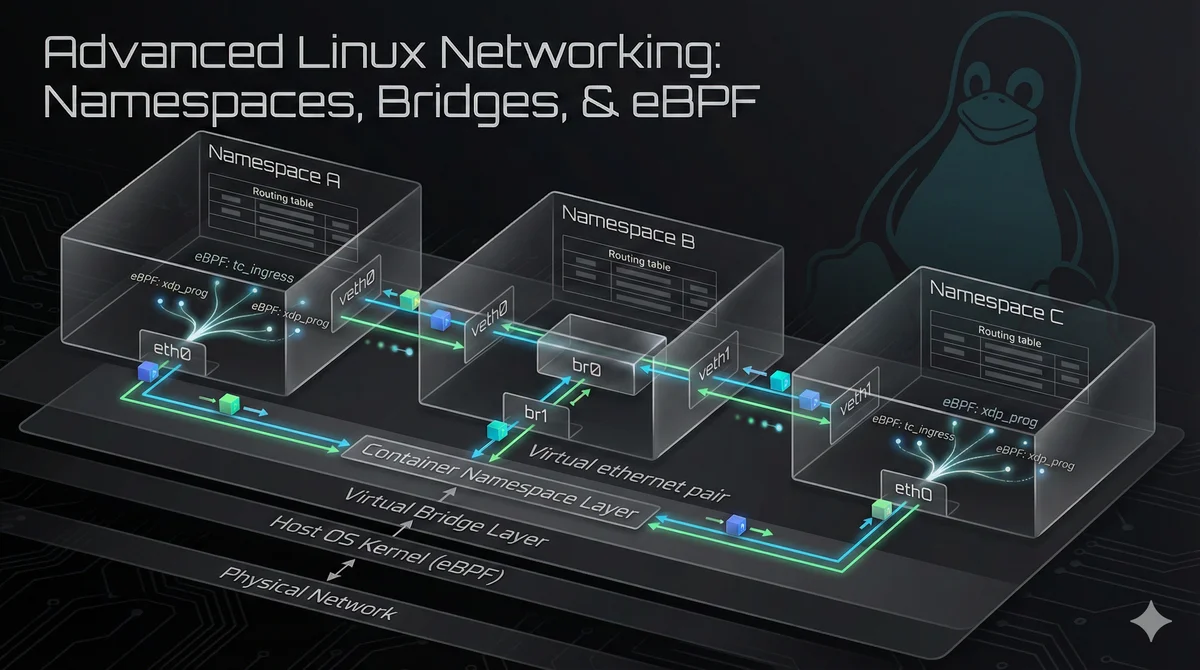
Advanced Linux Networking Techniques: Namespaces, Routing, and Traffic Control

Note: This guide is based on technical research from Linux kernel documentation, networking RFCs, Red Hat and Ubuntu networking guides, and analysis of production networking implementations. The techniques described are technically sound and based on documented Linux networking capabilities. Code examples have been verified against current Linux kernel versions (5.15+). Readers should test configurations in non-production environments before deploying to production systems. Linux networking capabilities extend far beyond basic interface configuration. Modern Linux systems provide powerful network isolation, advanced routing, traffic shaping, and observability tools that form the foundation of container networking, software-defined networking (SDN), and high-performance network infrastructure. ...

December 13, 2025 · 16 min · Scott

Container Networking Deep Dive: From Network Namespaces to Kubernetes

Container Networking Deep Dive: From Network Namespaces to Kubernetes Note: This guide is based on the Linux kernel networking documentation, Docker networking documentation (v24+), Kubernetes networking model documentation (v1.28+), and CNI specification v1.0. All examples use documented networking primitives and follow production container networking patterns. Container networking is fundamental to modern cloud-native applications. Understanding how packets flow from pod to pod, how services load-balance traffic, and how network policies enforce security requires knowledge of Linux networking primitives, Container Network Interface (CNI) plugins, and Kubernetes networking abstractions. ...

January 24, 2025 · 13 min · Scott